Minggu, 28 Februari 2010

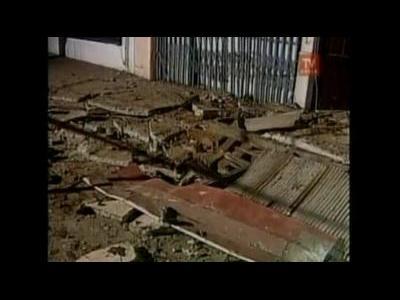
214 Orang Tewas dan Ancaman Tsunami Meluas akibat Gempa Chile

214 Orang Tewas dan Ancaman Tsunami Meluas akibat Gempa Chile
Minggu, 28 Februari 2010 | 07:41 WIB

HONOLULU, KOMPAS.com - Ribuan warga Hawaii sempat melarikan diri untuk menyelamatkan diri karena dicekam rasa khawatir setelah sempat dikeluarkan peringatan tsunami menyusul guncangan gempa bumi dahsyat berkekuatan 8,8 skala Richter. Sekitar 15 jam setelah gempa mengguncang Chile, gelombang laut tinggi sempat menerjang Hawaii.

Tidak sesuai dengan yang dikhawatirkan sebelumnya, gelombang laut tertinggi hanya mencapai setengah meter di Kawaihe. Pusat Peringatan Tsunami Pasifik sempat memperingatkan ancaman gelombang lebih tinggi dapat terjadi dalam beberapa jam ke depan. Namun, peringatan tsunami akhirnya dicabut.

Sejumlah warga di Maui didesak untuk membatasi pemakaian air bersih saat pemerintah setempat menutup sistem pengolahan air bersih sebagai antisipasi tsunami. Sementara di Oahu, sejumlah taman, lapangan golf dan kebun binatang ditutup untuk umum. Sejumlah armada bus umum menyediakan pelayanan gratis bagi mereka yang merasa perlu bergabung dengan upaya evakuasi setelah sempat dikeluarkan peringatan tsunami.

Presiden AS Barack Obama juga telah mengeluarkan peringatan waspada tsunami menyusul gempa bumi dahsyat yang mengguncang sekitar 115 kilometer kota pesisir Concepcion, Chili dan hingga kini telah menewaskan 214 orang. Peringatan ini merupakan yang pertama kali dikeluarkan di AS dalam 16 tahun terakhir.

Badan Cuaca Jepang juga mengeluarkan peringatan tentang potensi besar tsunami di perairan Pasifik setelah gempa besar mengguncang Chile. Gelombang setinggi 3 meter diperkirakan akan menerjang wilayah pesisir utara Aomori, Iwate dan Miyagi.

Penulis: JIM | Editor: jimbon | Sumber : AFP, AP

Sabtu, 27 Februari 2010

Hawaii blasts sirens, warning of possible tsunami

Hawaii blasts sirens, warning of possible tsunami


Motorists line up near a gasoline station early Saturday, Feb. 27, 2010, in EwaAP – Motorists line up near a gasoline station early Saturday, Feb. 27, 2010, in Ewa Beach, Hawaii. Hawaii …

EWA BEACH, Hawaii – A tsunami threatened the Pacific Rim on Saturday, with an 8.8-magnitude earthquake off Chile sending potentially deadly waves across the ocean at the speed of a jetliner.

Hawaii woke residents with sirens, alerting them to the waves. A tsunami warning — the highest alert level — was issued earlier for the island chain. Boats and people near the coast were being evacuated.Hilo International Airport, located along the coast, was closed.

Residents lined up at supermarkets to stock up on water, canned food and batteries. Cars lined up 15 long at several gas stations.

The first waves were expected at 11:19 a.m. Saturday (4:19 p.m. EST; 2119 GMT). Most Pacific Rim nations, awaiting further data, did not order evacuations but advised people in low-lying areas to be on the lookout.

In Tonga, however, police and defense forces have begun a mass evacuation from low-lying coastal areas as they warned residents that tsunami waves about three feet (one meter) high could wash ashore within three hours.

"I can hear the church bells ringing to alert the people," National Disaster Office deputy director Mali'u Takai told The Associated Press. "We will move up to 50,000 people to the interior and away from the coasts."

Waves 6 feet (1.8 meter) above normal hit near Concepcion, Chile shortly after the quake.

Unlike other tsunamis in recent years, emergency officials along the Pacific have hours to prepare and possibly evacuate residents.

"We've got a lot of things going for us," said Charles McCreery, the director of the Pacific Tsunami Warning Center, which issues warnings to almost every country around the Pacific Rim and to most of the Pacific island states. "We have a reasonable lead time.

"We should be able to alert everyone in harm's way to move out of the evacuation zones," he said.

A warning was also in effect for Guam, American Samoa, Samoa and dozens of other Pacific islands.

American Samoa Lt. Gov. Aitofele Sunia activated emergency services and called on residents of shoreline villages to move to higher ground. Police in Samoa issued a nationwide alert to begin coastal evacuations. The tsunami is expected to reach the islands Saturday morning.

Meanwhile, disaster management officials in Fiji said they have been warned to expect waves of as high as 7.5 feet (2.3 meters) to hit the northern and eastern islands of the archipelago and the nearby Tonga islands.

A lower-grade tsunami advisory was in effect for the coast of California and an Alaskan coastal area from Kodiak to Attu islands. Tsunami Center officials said they did not expect the advisory would be upgraded to a warning.

Waves were likely to hit Asian, Australian and New Zealand shores within 24 hours of Saturday's quake. A tsunami wave can travel at up to 600 mph, said Jenifer Rhoades, tsunami program manager at the National Weather Service in Washington, DC.

After the sirens are sounded in Hawaii, people in coastal areas, such as tourist-filled Waikiki, would then be instructed on a possible evacuation. The sirens will also be sounded again three hours prior to the estimatedarrival time.

McCreery said he didn't know how big the waves will be, but expected them to be the largest to hit Hawaii since 1964.

"If you're in an evacuation zone, police or civil defense volunteers would instruct you to evacuate, or instructions will come out over the radio and TV," said Shelly Ichishita, spokeswoman for the state's civil defense.

If coastal areas are evacuated, visitors in Waikiki would be moved to higher floors in their hotels, rather than moved out of the tourist district, which could cause gridlock.

Some Pacific nations in the warning area were heavily damaged by a tsunami last year.

On Sept. 29, a tsunami spawned by a magnitude-8.3 earthquake killed 34 people in American Samoa, 183 inSamoa and nine in Tonga. Scientists later said that wave was 46 feet (14 meters) high.

Past South American earthquakes have had deadly effects across the Pacific.

A tsunami after a magnitude-9.5 quake that struck Chile in 1960, the largest earthquake ever recorded, killed about 140 people in Japan, 61 in Hawaii and 32 in the Philippines.

That tsunami was about 3.3 to 13 feet (one to four meters) in height, Japan's Meteorological Agency said.

Japanese public broadcaster NHK quoted earthquake experts as saying the tsunami would likely be tens of centimeters (inches) high and reach Japan in about 22 hours.

A tsunami of 28 centimeters (11 inches) was recorded after a magnitude-8.4 earthquake near Chile in 2001.

The Meteorological Agency said it was still investigating the likelihood of a tsunami in Japan and did not issue a formal coastal warning.

Australia, meanwhile, was put on a tsunami watch.

The Joint Australian Tsunami Warning Center issued a tsunami warning Saturday night for a "potential tsunami threat" to New South Wales state, Queensland state, Lord Howe Island and Norfolk Island.

Any potential wave would not hit Australia until Sunday morning local time, it said.

The Philippine Institute of Vulcanology and Seismology issued a low-level alert saying people should await further notice of a possible tsunami. It did not recommend evacuations.

Seismologist Fumihiko Imamura, of Japan's Tohoku University, told NHK that residents near ocean shoresshould not underestimate the power of a tsunami even though they may be generated by quakes on the other side of the ocean.

"There is the possibility that it could reach Japan without losing its strength," he said.

___

Associated Press writers Mark Niesse in Honolulu, Kristen Gelineau in Sydney, Chris Havlik in Phoenix, Ray Lilley in Auckland, New Zealand, and Eric Talmadge in Tokyo contributed to this report.

http://news.yahoo.com/s/ap/20100227/ap_on_re_us/quake_tsunami;_ylt=Ajo3tb.1RJNgTSEHnrx7zwlvaA8F;_ylu=X3oDMTJlb2doa2pvBGFzc2V0A2FwLzIwMTAwMjI3L3F1YWtlX3RzdW5hbWkEY3BvcwMyBHBvcwM4BHNlYwN5bl90b3Bfc3RvcnkEc2xrA2hhd2FpaWJsYXN0cw--


Huge quake hits Chile; tsunami threatens Pacific

Huge quake hits Chile; tsunami threatens Pacific


Vehicles that were driving along a highway that collapsed near Santiago are seenAP – Vehicles that were driving along a highway that collapsed near Santiago are seen overturned on the asphalt …

TALCA, Chile – A devastating earthquake struck Chile early Saturday, toppling homes, collapsing bridges and plunging trucks into the fractured earth. A tsunami set off by the magnitude-8.8 quake threatened every nation around the Pacific Ocean — roughly a quarter of the globe.

Interior Minister Edmundo Perez Yoma said the most powerful quake to hit the country in a half-century killed at least 82 people, but the death toll was rising quickly.

In the town of Talca, just 65 miles (105 kilometers) from the epicenter, Associated Press journalist Roberto Candia said it felt as if a giant had grabbed him and shaken him.

The town's historic center, filled with buildings of adobe mud and straw, largely collapsed, though most of those were businesses that were not inhabited during the 3:34 a.m. (1:34 a.m. EST, 0634 GMT) quake. Neighbors pulled at least five people from the rubble while emergency workers, themselves disoriented, asked for information from reporters.

Many roads were destroyed, and electricity, water and phone lines were cut to many areas — meaning there was no word of death or damage from many outlying areas.

In the Chilean capital of Santiago, 200 miles (325 kilometers) northeast of the epicenter, a car dangled from a collapsed overpass, the national Fine Arts Museum was badly damaged and an apartment building's two-story parking lot pancaked, smashing about 50 cars whose alarms rang incessantly.

Experts warned that a tsunami could strike anywhere in the Pacific, and Hawaii could face its largest waves since 1964 starting at 11:19 a.m. (4:19 p.m. EST, 2119 GMT), according to Charles McCreery, director of the Pacific Tsunami Warning Center.

Tsunami waves were likely to hit Asian, Australian and New Zealandshores within 24 hours of the earthquake. The U.S. West Coast andAlaska, too, were threatened.

A huge wave swept into a populated area in the Robinson Crusoe Islands, 410 miles (660 kilometers) off the Chilean coast, PresidentMichelle Bachelet said, but there were no immediate reports of major damage.

Bachelet had no information on the number of people injured. She declared a "state of catastrophe" in central Chile.

"We have had a huge earthquake, with some aftershocks," she said from an emergency response center. She said Chile has not asked for assistance from other countries, and urged Chileans not to panic.

"The system is functioning. People should remain calm. We're doing everything we can with all the forces we have. Any information we will share immediately," she said.

Powerful aftershocks rattled Chile's coast — 24 of them magnitude 5 or greater and one reaching magnitude 6.9 — the U.S. Geological Survey reported.

In Santiago, modern buildings are built to withstand earthquakes, but many older ones were heavily damaged, including the Nuestra Senora de la Providencia church, whose bell tower collapsed. A bridge just outside the capital also collapsed, and at least one car flipped upside down.

Several hospitals were evacuated due to earthquake damage, Bachelet said.

Santiago's airport will remain closed for at least 24 hours, airport director Eduardo del Canto said. The passenger terminal suffered major damage, he told Chilean television in a telephone interview. TV images show smashed windows, partially collapsed ceilings and pedestrian walkways destroyed.

Santiago's subway was shut as well and hundreds of buses were trapped at a terminal by a damaged bridge, Transportation and Telecommunications Minister told Chilean television. He urged Chileans to make phone calls or travel only when absolutely necessary.

Candia was visiting his wife's 92-year-old grandmother in Talca when the quake struck.

"Everything was falling — chests of drawers, everything," he said. "I was sleeping with my 8-year-old sonDiego and I managed to cover his head with a pillow. It was like major turbulence on an airplane."

In Concepcion, 70 miles (115 kilometers) from the epicenter, nurses and residents pushed the injured through the streets on stretchers. Others walked around in a daze wrapped in blankets, some carrying infants in their arms.

Concepcion, Chile's second-largest city, is 60 miles (95 kilometers) from the ski town of Chillan, a gateway to Andean ski resorts that was destroyed in a 1939 earthquake.

The quake also shook buildings in Argentina's capital of Buenos Aires, 900 miles (1,400 kilometers) away on the Atlantic side of South America.

Marco Vidal, a program director for Grand Circle Travel who was traveling with a group of 34 Americans, was on the 19th floor of the Crown Plaza Santiago hotel when the quake struck.

"All the things start to fall. The lamps, everything, was going on the floor," he said. "I felt terrified."

Cynthia Iocono, from Linwood, Pennsylvania, said she first thought the quake was a train.

"But then I thought, `Oh, there's no train here.' And then the lamps flew off the dresser and my TV flew off onto the floor and crashed."

The quake struck after concert-goers had left South America's leading music festival in the coastal city of Vina del Mar, but it caught partiers leaving a disco.

"It was very bad. People were screaming. Some people were running, others appeared paralyzed. I was one of them," Julio Alvarez told Radio Cooperativa.

The Pacific Tsunami Warning Center called for "urgent action to protect lives and property" in Hawaii, which is among 53 nations and territories subject to tsunami warnings.

"Sea level readings indicate a tsunami was generated. It may have been destructive along coasts near theearthquake epicenter and could also be a threat to more distant coasts," the warning center said. It did not expect a tsunami along the west of the U.S. or Canada.

The largest earthquake ever recorded struck the same area of Chile on May 22, 1960. The magnitude-9.5 quake killed 1,655 people and left 2 million homeless. The tsunami that it caused killed people in Hawaii,Japan and the Philippines and caused damage to the west coast of the United States.

___

Eva Vergara reported from Santiago, Chile. Associated Press Television News cameraman Mauricio Cuevas in Santiago and AP writer Sandy Kozel in Washington contributed to this story.

http://news.yahoo.com/s/ap/20100227/ap_on_re_la_am_ca/lt_chile_earthquake;_ylt=As415KpXgVEsso5oHog2jbpvaA8F;_ylu=X3oDMTJrb25wdDFuBGFzc2V0A2FwLzIwMTAwMjI3L2x0X2NoaWxlX2VhcnRocXVha2UEY3BvcwMxBHBvcwMyBHNlYwN5bl90b3Bfc3RvcnkEc2xrA2h1Z2VxdWFrZWhpdA--

Hawaii under tsunami warning

Hawaii under tsunami warning


People gather on a street after an earthquake struck in downtown ValparaisoReuters – People gather on a street after an earthquake struck in downtown Valparaiso February 27, 2010. A massive …

EWA BEACH, Hawaii – Hawaii braced Saturday for a potentially damaging tsunami, after a massive earthquake off Chile sent waves across the Pacific Ocean.

The Pacific Tsunami Warning Center issued a tsunami warning — its highest alert — for Hawaii, where incoming waves could cause damage along the coastlines across the island chain. A warning was also in effect for Guam, American Samoa and dozens of other Pacific islands.

The first waves were expected to arrive in Hawaii at 11:19 a.m. Saturday (4:19 p.m. EST).

A lower-grade tsunami advisory was in effect for the coast of California and an Alaskan coastal area from Kodiak to Attu islands. Authorities inAustralia did not issue a warning, but asked residents to stay away from the coast.

The Ewa Beach, Hawaii-based center called for "urgent action to protect lives and property" in Hawaii, which is among 53 nations and territories subject to tsunami warnings.

"The main thing is we want everyone to take this event seriously," saidCharles McCreery, director of the center.

McCreery said he didn't know how big the waves will be, but he expected them to be the largest to hit Hawaii since 1964.

The state planned to sound warning sirens statewide at 6 a.m. to alert residents and tourists of the incoming tsunami, said Shelly Ichishita, spokeswoman for state civil defense.

People in coastal areas, such as tourist-filled Waikiki, will then be instructed on a possible evacuation. The sirens will also be sounded again three hours prior to the estimated arrival time.

"If you're in an evacuation zone, police or civil defense volunteers would instruct you to evacuate, or instructions will come out over the radio and TV," she said.

If coastal areas are evacuated, visitors in Waikiki would be moved to higher floors in their hotels, rather than moved out of the tourist district, which could cause gridlock.

Ichishita said people who are not in evacuation zones to stay away from coastal areas.

Despite the incoming waves, the state was calm through the night with no signs of panic.

"We've got a lot of things going for us," McCreery said. "We have a reasonable lead time. The evacuation should all take place during daylight hours, and wave impact should be during daylight hours.

"We should be able to alert everyone in harm's way to move out of the evacuation zones."

Barry Hirschon, also of the Tsunami center, said the advisory for the California coast and parts of Alaska was the agency's lowest level alert.

"It's a heads up that there's been a tsunami event and it could affect the coasts later," Hirschon told CNN. "I don't think it will be updated to a warning."

The largest earthquake ever recorded struck the same area of Chile in 1960. The deadly wave that it caused raced across the Pacific and hit the Hilo area of the Big Island, where 61 people were killed.

___

Associated Press writers Mark Niesse in Honolulu and Kristen Gelineau in Sydney contributed to this report.

http://news.yahoo.com/s/ap/us_quake_tsunami_alerts;_ylt=AuSVe3YWMztjfH5_.OprFkf9xg8F;_ylu=X3oDMTE2MzAyazdlBHBvcwMxBHNlYwN5bi1yLWItbGVmdARzbGsDLWhhd2FpaXVuZGVy