Tampilkan postingan dengan label Pakistan floods. Tampilkan semua postingan

Rabu, 18 Agustus 2010

Pakistan floods to recede only by month's end
Pakistan floods to recede only by month's end


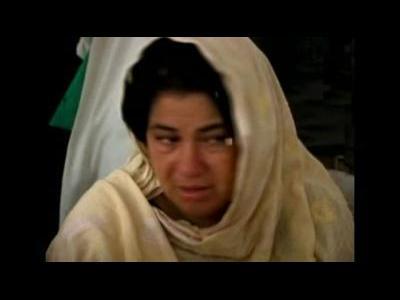
A flood survivor looks as she waits for relief goods at a temporary camp for displaced people in Multan, Pakistan on Wednesday Aug. 18, 2010. The flooAP – A flood survivor looks as she waits for relief goods at a temporary camp for displaced people in Multan, …

ISLAMABAD – The floodwaters that have ravaged Pakistan will not recede fully until the end of August, the country's top meteorologist said Wednesday, a grim forecast for the more than 20 million people living homeless or otherwise affected by the deluge.

The scale of the disaster has badly strained the government and thepolice and army, which are handling much of the relief effort. Islamist militants clashed with police overnight in the northwest, and police said the insurgents were seeking to exploit the state's weaknesses as it dealt with the floods.

Pakistan senior meteorologist Arif Mahmood said existing river torrents were still heading to major cities such as Hyderabad and Sukkur in the south and could yet cause more floods. But he said there were no heavy rains forecast this week.

"This is a good news for aid agencies involved in the rescue and reliefoperations," he said.

The floods that began three weeks ago have submerged tens of thousands of villages, killed around 1,500 people and affected 20 million others, authorities say. The floods hit first in the northwest, wiping out much of its infrastructure, and then the bloated rivers gushed toward the south and the east, displacing millions more people.

About a fifth of Pakistani territory has been affected.

The U.N. appealed last week for $459 million in international aid for immediate relief to Pakistan. Aid groups have complained that the response so far has been anemic, but U.N. spokesman Maurizio Giuliano announced Wednesday that more than half of the money — 54.5 percent — had come in.

"This is very encouraging," he said.

Still, he said major challenges remained, especially preventing what he feared may be "a second wave" of death from disease and hunger. He also said rescue workers were trying to procure more plastic sheeting and tents for an estimated 4.6 million people in Punjab and Sindh who have no shelter.

The northwest is the epicenter of Pakistan's fight against al-Qaida and the Taliban, and attacks by militants late Tuesday and overnight highlighted the threat they still pose.

A group of militants first killed two members of an anti-Taliban militia in the Adezai area of Peshawar as they headed to pray at a mosque late Tuesday, said Liaqat Ali Khan, Peshawar police chief.

In the hours after, dozens of militants from the Khyber tribal region, which lies near Peshawar and along the Afghan border, attacked police posts in the Peshawar's Sarband area. The two sides exchanged fire for about an hour before the militants retreated to Khyber, Khan said. Several militants were killed, but there were no police casualties.

"As the police force is busy in rescue and relief work for flood affectees, militants tried to take advantage of the situation to attack Peshawar, but the police force was fully alert and vigilant," Khan said.

The Pakistani Taliban have urged citizens to reject any foreign aid, saying it will only be stolen by the political elite in the impoverished nation of 175 million.

The civilian government's standing has been badly damaged by its chaotic response to the floods, though many observers note that few governments could have been able to handle such a large-scale disaster well.

President Asif Ali Zardari was in Russia on Wednesday for a regional summit. He was expected to stay only a few hours before returning to his deluged country. An earlier multi-day trip to Europe just as the disaster was unfolding severely damaged Zardari's already poor reputation.

The military, meanwhile, has some 60,000 troops dealing with flood relief. Many of those soldiers would normally be battling insurgents or holding territory they had already cleared.

U.S. Ambassador to Pakistan Anne Patterson said Tuesday that it was too soon to understand what impact the disaster would have on the Taliban and al-Qaida in Pakistan, but that it was a concern for Washington. The U.S. has pushed Pakistan to eliminate militant hideouts it fears are being used as rest stops for insurgents engaged in the war in Afghanistan.

___

Khan reported from Peshawar, Pakistan.

http://news.yahoo.com/s/ap/20100818/ap_on_re_as/as_pakistan_floods

Senin, 02 Agustus 2010

Risk of disease rises amid deadly Pakistan floods

Risk of disease rises amid deadly Pakistan floods


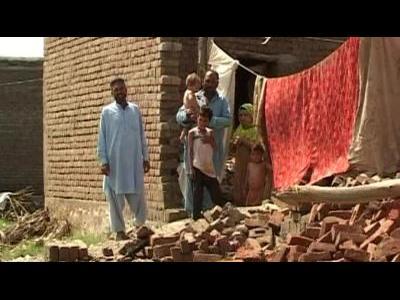
People collect households from their houses destroyed by heavy floods in Nowshera, Pakistan on Monday, Aug. 2, 2010. The government has deployed thousAP – People collect households from their houses destroyed by heavy floods in Nowshera, Pakistan on Monday, …

PESHAWAR, Pakistan – Pakistan dispatched medical teams Monday to the deluged northwest amid fears that cholera could spread after the worst floods in the country's history that have already killed up to 1,200 people, an official said.

The disaster has forced around 2 million to flee their homes. Residents have railed against the government for failing to provide enough emergency assistance nearly a week after extremely heavy monsoon rains triggered raging floodwaters in Khyber-Pakhtoonkhwa province.

Around 250 flood victims blocked a main road in the hard-hit district of Nowshera late Monday, complaining they had receiving little or no assistance, according to an Associated Press Television News cameraman at the scene.

The government says it has deployed thousands of rescue workers who have so far saved an estimated 28,000 people and distributed basic food items. The army has also sent some 30,000 troops and dozens of helicopters, but the scale of the disaster is so vast that many residents said it seems like officials are doing nothing. Thousands more people in the province remain trapped by the floodwaters.

The anger of the flood victims poses a danger to the already struggling government, now competing with Islamist movements to deliver aid in a region with strong Taliban influence.

"We need tents. Just look around," said flood victim Faisal Islam, sitting on the only dry ground he could find in Nowshera district — a highway median — surrounded by hundreds of people in makeshift shelters constructed from dirty sheets and plastic tarps.

Like many other residents of Pakistan's northwest, people camped out by the highway in Kamp Koroona village waded through the water to their damaged houses to salvage their remaining possessions: usually just a few mud-covered plates and chairs.

"This is the only shirt I have. Everything else is buried," said Islam.

The army has given them some cooking oil and sugar, but Islam complained that they needed much more.

Now people in the northwest also face the threat of waterborne disease — which could kill thousands more if health workers cannot deliver enough clean drinking water and treat and isolate any patients in crowded relief camps.

"To avert the looming threat of spread of waterborne diseases, especially cholera, we have dispatched dozens of mobile medical teams in the affected districts," said Sohail Altaf, the top medical official in Khyber-Pakhtoonkhwa.

Officials have yet to receive concrete reports of cholera cases, but fear of an outbreak is high, said Altaf. Patients with stomach problems from dirty water are being treated in government medical camps, he said.

The Pakistan Red Crescent and International Red Cross said they were distributing aid and evaluating further needs in areas isolated by washed-out bridges and roads.

The flooding crisis is especially dire because so many people lost literally all that they had, said Muhammad Ateeb Siddiqui, the Red Crescent's director of operations.

"We now need to urgently distribute not only food but also the means to cook it," he said. "The distribution of relief is severely constrained by damaged infrastructure, and the widespread contamination of water supplies has the potential to create major health problems."

The agencies said the flooding impact would shift south in the coming days as the waters moved downstream.

The disastrous flooding comes at a time when the weak and unpopular Pakistani government is already struggling to cope with a faltering economy and a brutal war against Taliban militants that has killed thousands of people in the past few years.

The death toll from the disaster has ranged from about 870 provided by the prime minister's office to 1,200 given by Bashir Ahmed Bilour, senior minister in Khyber-Pakhtoonkhwa, who warned that it could go even higher. More than 2 million people have been displaced, he said.

Pakistan's international partners have tried to bolster the government's response by offering millions of dollars in emergency aid.

The United Nations and the United States announced Saturday that they would provide $10 million dollars each in emergency assistance. The U.S. has also provided rescue boats, water filtration units, prefabricated steel bridges and thousands of packaged meals that Pakistani soldiers tossed from helicopters as flood victims scrambled to catch them.

The high-profile U.S. gesture of support comes at a time when the Obama administration is trying to dampen anti-American sentiment in Pakistan and enlist the country's support to turn around the Afghan war.

The U.S. provided similar emergency assistance after Pakistan experienced a catastrophic earthquake in 2005 that killed nearly 80,000 people. The aid briefly increased support for the U.S. in a country where anti-American sentiment is pervasive.

But feelings have since shifted, and only 17 percent of Pakistanis now have a favorable view of the U.S., according to a recent poll by the Pew Research Center. Conducted in April 2010, the survey has a margin of error of three percentage points.

The U.S. could be hoping to get a similar popularity boost from the emergency flood assistance. But like the earthquake relief effort, the U.S. must compete with aid groups run by Islamist militants who also use assistance to increase their support.

Representatives from a charity allegedly linked to the Lashkar-e-Taiba militant group distributed food and offered medical services on Sunday to victims in the town of Charsada.

With suspected ties to al-Qaida, Lashkar-e-Taiba has been blamed for the 2008 attacks in Mumbai, India, that killed 166 people, and the U.S. military has said the group has stepped up activity in Afghanistan as well.

Pakistani militant groups often rail against government ineffectiveness as a way to build support, a message likely to resonate with many in the northwest who have criticized the official flood response.

____

Associated Press writer Riaz Khan in Peshawar and Frank Jordans in Geneva, Switzerland, contributed to this report.

http://news.yahoo.com/s/ap/20100802/ap_on_he_me/as_pakistan_floods

Minggu, 01 Agustus 2010

Death toll from Pakistan floods rises to 1,100

Death toll from Pakistan floods rises to 1,100

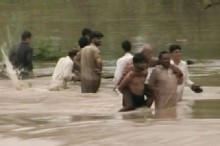
PESHAWAR, Pakistan — The death toll from massive floods in northwestern Pakistan rose to 1,100 Sunday as rescue workers struggled to save more than 27,000 people still trapped by the raging water.

The rescue effort was aided by a slackening of the monsoon rains that have caused the worst flooding in decades in Khyber-Pakhtoonkhwa province. But as flood waters started to recede, authorities began to understand the full scale of the disaster.

"Aerial monitoring is being conducted, and it has shown that whole villages have washed away, animals have drowned and grain storages have washed away," said Latifur Rehman, spokesman for the Provincial Disaster Management Authority. "The destruction is massive."

The flooding, which the U.N. estimates has affected 1 million people nationwide, comes at a time when the Pakistani government is already grappling with a faltering economy and a war against the Taliban.

The United States announced Sunday that it would provide Pakistan with $10 million in humanitarian assistance, a high-profile gesture at a time when the Obama administration is trying to dampen anti-American sentiment in the country.

The 1,100 death toll from the flooding could go even higher since rescue workers have been unable to access certain areas, said Adnan Khan, a disaster management official.

Almost 700 people have drowned in the Peshawar valley, which includes the districts of Nowshera and Charsada, and 115 others are still missing, Khan said.

The districts of Swat and Shangla have also been hit hard and have suffered more than 400 deaths, said Mujahid Khan, the head of rescue services for the Edhi Foundation, a private charity.

Residents of Swat were still trying to recover from a major battle between the army and the Taliban last spring that caused widespread destruction and drove some 2 million people from their homes. About 1 million of those were still displaced.

In Swat alone, the floods have destroyed more than 14,600 houses and 22 schools, said Khan.

Authorities have deployed 43 military helicopters and more than 100 boats to try to rescue some 27,300 people still trapped by the floods, said Rehman, the disaster management spokesman.

"All efforts are being used to rescue people stuck in inaccessible areas and all possible help is being provided to affected people," said Rehman.

But some residents stepped up their criticism Sunday of the government's response.

"The flood has devastated us all, and I don't know where my family has gone," said Hakimullah Khan, a resident of Charsadda town who complained the government has not helped him search for his missing wife and three children.

"Water is all around and there is no help in sight," said Khan.

The military deployed 30,000 army troops who helped rescue more than 20,700 people, said Khan, the disaster management official.

However, some people like Sehar Ali Shah who were rescued complained that authorities didn't provide shelter that would allow them to stay until the floodwaters receded.

"My son drowned, but I don't see the government taking care of us," said Shah after returning to his half-submerged house in the city of Nowshera. "The government has not managed an alternate place to shift us."

The flooding has also affected the central Pakistani province of Punjab, where troops rescued more than 1,400 people trapped by rising water, said Brig. Ahmad Waqas.

"We have lost everything: our houses, our crops, cattle," said Ahmad Hasan at a government relief camp in Taunsa Sharif district.

The threat of disease loomed as well as some evacuees in the northwest arrived in camps with fever, diarrhea and skin problems.

"There is now a real danger of the spread of waterborne diseases like diarrhea, asthma, skin allergies and perhaps cholera in these areas," said Shaharyar Bangash, the head of operations in Khyber-Pakhtoonkhwa for World Vision, an international humanitarian group.

A variety of nations and aid organizations have begun to mobilize a response to the disaster.

The U.S. delivered thousands of food packages, four rescue boats and two water-filtration units to the northwest, said Rehman.

"This is much needed stuff in the flood-affected areas and we need more of it from the international community," said Rehman.

The U.S. Embassy in Islamabad also announced it will provide 12 prefabricated steel bridges to temporarily replace those damaged by the water.

But some residents wondered how they would ever recover from such a disaster.

"I won't be able to cover my losses for 10 years," said Shair Dad, a timber shop owner in Nowshera who lost most of his wood in the floodwaters.

___

Associated Press writers Nabeel Yusuf in Nowshera and Khalid Tanveer in Taunsa Sharif contributed to this report.

http://www.comcast.net/articles/news-world/20100801/AS.Pakistan.Floods/